

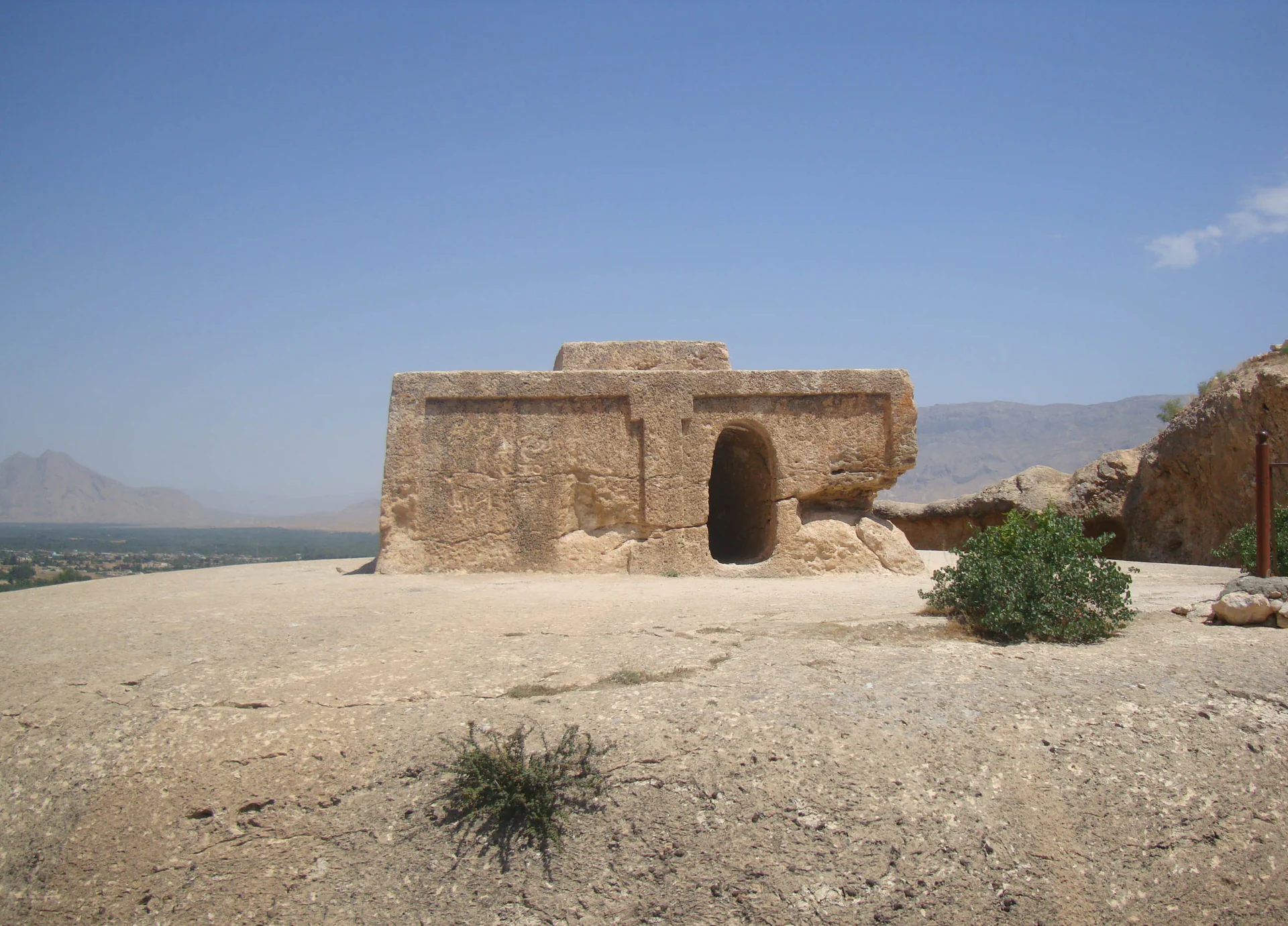
Takht-e Rostam in Samangan, photographed in June 2009. Photo credits
About Samangan Tourism
Samangan's defining heritage site is Takht-e Rustam, a Buddhist stupa and cave complex near Aybak. Its architecture is cut into the natural rock, giving this destination a different character from a city of standing monuments. Discover the archaeological story behind the name and identify the interests you would like a proposed journey to explore.
Samangan offers a distinctive introduction to Afghanistan's Buddhist heritage through Takht-e Rustam. Near Aybak, the rock itself was shaped into a stupa and a group of cave spaces. An archaeological report describes both the monolithic stupa and carved cave interiors, including a lotus motif. The name also carries a separate association with the stories of Rustam; that literary tradition should be distinguished from the archaeological identification of the monument. This is a destination for looking carefully and asking how a place was made and understood. Share an interest in Buddhist history, rock-cut architecture or the site's storytelling traditions when requesting a journey review.
Takht-e Rustam's rock-cut stupa
Takht-e Rustam's stupa was formed from the natural rock rather than assembled as a freestanding masonry tower. Its scale and the space cut around it are central to understanding the monument. We suggest looking first at the overall form and then at the smaller details. Thinking about what was removed from the rock can make this unusual method of construction easier to appreciate.
The cave spaces
The published archaeological survey records cave interiors as well as the stupa, and describes a lotus carved into one ceiling. Such details help shift attention from the site's silhouette to its interior design. Treat the cave complex as archaeological fabric, not a place for climbing or collecting fragments. Any proposed exploration should follow the directions given for the site during an arranged visit.
Archaeology and the story of Rustam
The association with Rustam belongs to the site's later storytelling tradition. The Buddhist identification comes from its archaeological features. These are two different ways in which a place can carry meaning, and both deserve clear explanation. A thoughtful account can discuss the name and its cultural resonance while avoiding the claim that a legendary hero built the surviving stupa.
Aybak and the setting of the monument
Official documentation places Takht-e Rustam at Aybak, the provincial capital, while archaeological writing describes the site in relation to Samangan's wider landscape. Keep that relationship in mind when planning: a province, its city and an individual monument are different parts of a destination. Ask to review the complete programme rather than assuming that a stop at the stupa covers every interest in Samangan.
Understand the place through its evidence
An early published field survey provides drawings, descriptions and photographs of Takht-e Rustam. Such records are valuable companions to an archaeological visit because they explain features that can otherwise appear simple or puzzling. We suggest reviewing historical documentation before travelling and using it to form questions. Older site records describe the evidence available to their authors, rather than guaranteeing today's visitor experience.
Plan around your interests
If Samangan is part of your proposed Afghanistan journey, tell Larmoond whether you want a focused introduction or a more detailed discussion of Buddhist architecture. Mention your walking and mobility requirements and any particular features you hope to understand. Submit those preferences through the private-journey enquiry so that the suitability and practical scope of a visit can be reviewed before a programme is confirmed.
A Quick Information Guide to Samangan
| Provincial centre | Aybak, also written Aibak |
|---|---|
| Region | Northern Afghanistan |
| Known for | Takht-e Rustam, rock-cut Buddhist heritage and almonds |
| Journey focus | Archaeology, storytelling and local agricultural culture |
Journey Ideas for Samangan
Start with the places and activities that interest you. Browse the destination below, then ask us to shape an individual itinerary around your priorities.
Explore journey optionsCulture, Traditions and Festivals
Samangan's cultural identity includes both the stories attached to Takht-e Rustam and the province's connection with almonds. A documented Badam Gul poetry gathering brought together verses about almond blossom, spring and Samangan in Dari, Pashto and Uzbek. This provides a useful introduction to the relationship between agriculture and literature; it is background to local culture, not a promised event on a tour.
Best Time to Visit Samangan
Spring
If almond blossom interests you, request an update for the particular locality and dates. We recommend keeping the programme flexible: a documented cultural association with blossom does not guarantee flowering or a public gathering during your visit.
Summer
For a summer archaeology visit, plan pauses between outdoor observation and explanations of the site. Review the forecast for Aybak, and agree how much walking around the stupa and cave complex suits your group.
Autumn
We suggest combining heritage interpretation with an interest in local produce, checking what is actually available when you travel. Leave time to understand the site rather than treating Samangan only as a brief stop between cities.
Winter
Review the whole approach route for a winter journey, including any mountain crossing elsewhere in the itinerary. Confirm conditions at Takht-e Rustam and accommodation arrangements before planning a long outdoor visit or an overnight stop.
Best Places to Visit in Samangan
Takht-e Rustam's rock-cut stupa
Takht-e Rustam's stupa was formed from the natural rock rather than assembled as a freestanding masonry tower. Its scale and the space cut around it are central to understanding the monument. We suggest looking first …
Read moreThe cave spaces
The published archaeological survey records cave interiors as well as the stupa, and describes a lotus carved into one ceiling. Such details help shift attention from the site's silhouette to its interior design. Treat the …
Read moreArchaeology and the story of Rustam
The association with Rustam belongs to the site's later storytelling tradition. The Buddhist identification comes from its archaeological features. These are two different ways in which a place can carry meaning, and both deserve clear …
Read moreTourist Attractions in Samangan
Photo Gallery
Takht-e Rostam in Samangan, photographed in June 2009.
Photograph and source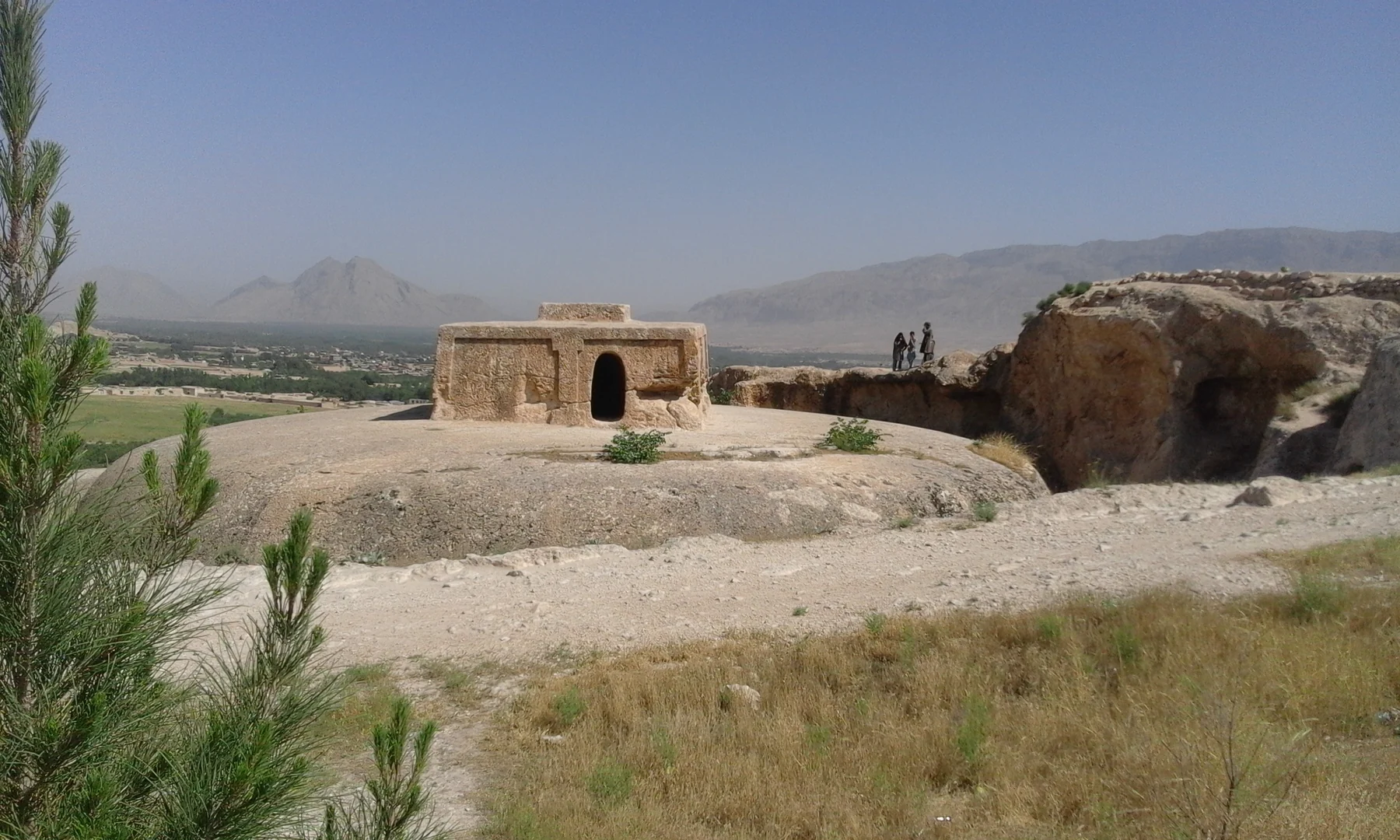
Takht-e Rostam in Samangan, photographed in May 2016.
Photograph and sourceTop Things to Do in Samangan
Study the form of Takht-e Rustam's rock-cut stupa and, where access is arranged, the cave spaces and carved details. Discuss the distinction between Buddhist archaeology and the later Rustam tradition. For broader provincial context, ask about an introduction to Aybak and locally sold almond products, with any market or producer visit agreed in advance.
How to Reach Samangan?
By Road
Aybak sits on the northern road corridor between Pul-e Khumri and Khulm, continuing towards Mazar-e Sharif. This makes Samangan geographically relevant to a proposed journey across the north. Takht-e Rustam is a separate local visit near Aybak. Plan the intercity connection and the site visit together, with current road information and stopping arrangements reviewed for the trip.
Plan Your Connections
Include your arrival point, onward destination and dates in your enquiry. Our team will review the connections for the complete journey.
Discuss your routeSamangan Tour Packages
A Private Journey Built Around You
Interested in Samangan? Share the places you want to see, your travel dates and group size. We will review your request and discuss a suitable itinerary.
Submitting a journey request does not confirm availability or create a booking.
Plan a Private JourneyFrequently Asked Questions
The surviving site is identified archaeologically as a Buddhist stupa and cave complex. Rustam belongs to a later storytelling tradition associated with its name. A good explanation can explore both without presenting the legend as construction history.
Aybak and Aibak are alternative English spellings of the provincial centre. Samangan is the province's name and also appears in historical descriptions of the locality. Use the specific city and site names when confirming your programme.
Almonds are part of the province's agricultural identity, and Badam Gul poetry gatherings have celebrated blossom and the local landscape. Ask about produce or cultural context when planning; a particular blossom display or event needs separate confirmation.
Its position on the northern road corridor makes that a reasonable itinerary idea to review. The appropriate combination depends on the places you want to visit, the approach journey and available time. It is not automatically a single-day programme.
Samangan Essential Information
Where to Stay in Samangan?
Ask first whether the agreed programme needs an overnight stay around Aybak or works better within a wider journey. If staying locally, request a named property and confirmation of room type, bathroom arrangements, heating or cooling, and meal options. Accommodation details and any transfers should appear clearly in the proposed itinerary.
A Few Tips Before Your Journey
At a rock-cut site, the surfaces and small details are part of the historical evidence. Keep to the agreed walking areas and leave fragments where they lie. Ask before photographing people, and distinguish photographs of the present site from illustrations showing a reconstruction.
Map of Samangan
Sources and Further Reading
Sources and further reading
Content reviewed on 10 September 2026. These references document the province and its heritage; they do not confirm current access or tour availability.
Kyoto University archaeological report: Haibak and Kashmir-Smast, edited by Seiichi Mizuno (1962)
https://pahar.in/pahar/Books%20and%20Articles/Afghanistan/1962%20Haibak%20and%20Kashmir-Smast--Buddhist%20cave-temples%20in%20Afghanistan%20and%20Pakistan%20ed%20by%20Mizuno%20s.pdf
The Silk Road: Museums in Afghanistan, discussion of Takht-e Rustam (2011)
https://edspace.american.edu/silkroadjournal/wp-content/uploads/sites/984/2017/09/Museums-in-Afghanistan.pdf
National Development Corporation: Takht-e Rustam at Aybak
https://ndc.gov.af/archives/4746
Travel planning sources
References reviewed on 10 September 2026. Historical reports describe places and routes; they do not establish current transport schedules or visitor access.
UN-Habitat: State of Afghan Cities (2015), provincial centres and geography
https://unhabitat.org/sites/default/files/download-manager-files/State%20of%20Afghan%20Cities%202015%20Volume_1.pdf
World Food Programme: Afghanistan General Logistics Planning Map (2021)
https://logcluster.org/sites/default/files/public/2021-10/afgglpma3l_20211013.pdf
Ministry of Information and Culture: Samangan's Badam Gul poetry gathering
https://moic.gov.af/ps/سمنګان-کې-د-بادام-ګل-مشاعره-جوړه-شوه
National Development Corporation: Takht-e Rustam at Aybak
https://ndc.gov.af/archives/4746
The Silk Road: Museums in Afghanistan, Takht-e Rustam archaeology and storytelling (2011)
https://edspace.american.edu/silkroadjournal/wp-content/uploads/sites/984/2017/09/Museums-in-Afghanistan.pdf
Kyoto University archaeological report: Haibak and Kashmir-Smast (1962)
https://pahar.in/pahar/Books%20and%20Articles/Afghanistan/1962%20Haibak%20and%20Kashmir-Smast--Buddhist%20cave-temples%20in%20Afghanistan%20and%20Pakistan%20ed%20by%20Mizuno%20s.pdf
Photo Credits
Takht-e Rostam in Samangan, photographed in June 2009.
AhmadElhan · 18 June 2009
Original photograph · CC BY-SA 4.0
Resized and encoded as WebP.
Takht-e Rostam in Samangan, photographed in May 2016.
AhmadElhan · 21 May 2016
Original photograph · CC BY-SA 4.0
Resized and encoded as WebP.