

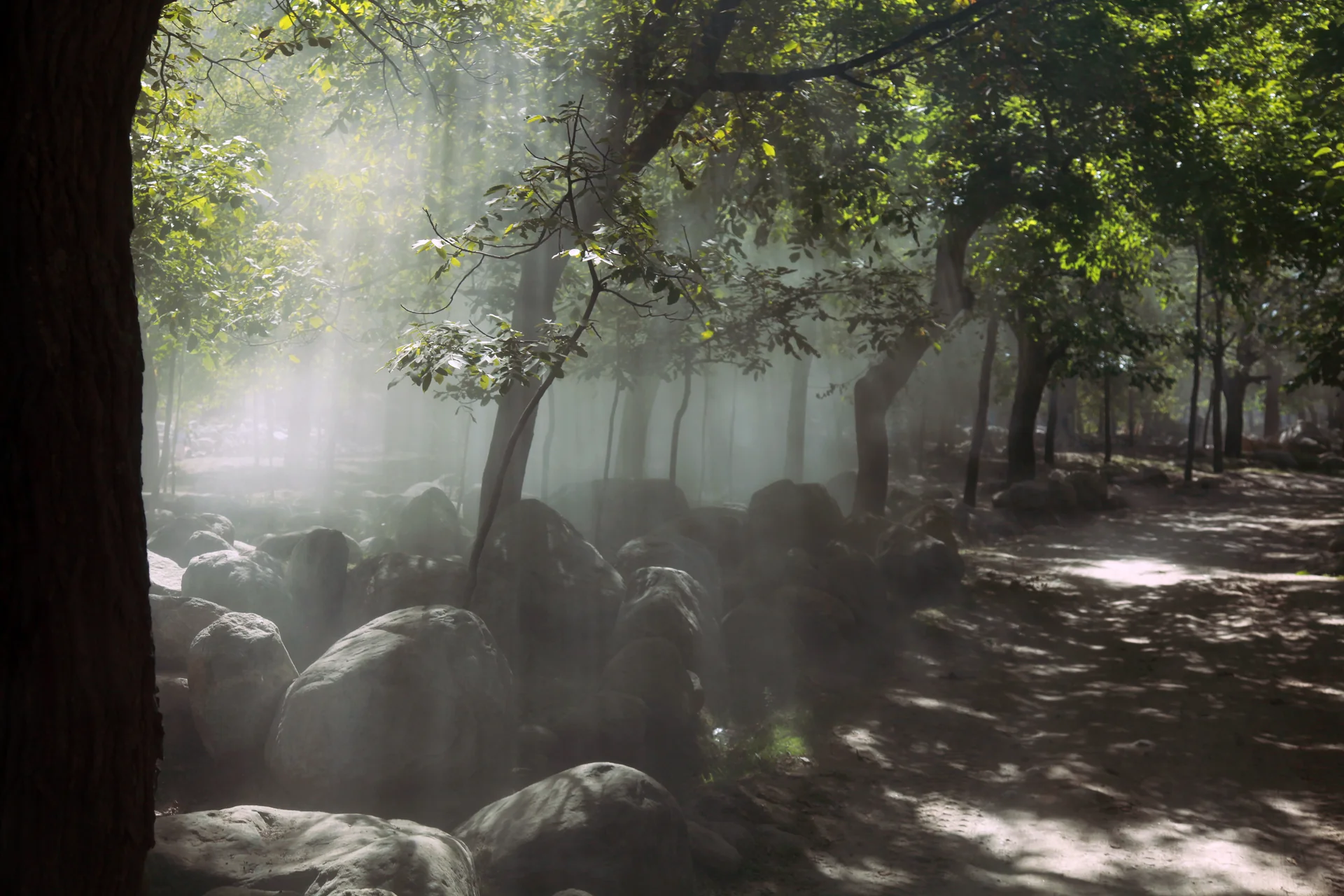
Sunlight through roadside trees in Farruhk Shah, Kapisa Province, August 2009. Photo credits
About Kapisa Tourism
Kapisa's destination story brings together Nijrab's landscape, the waterfall of Ghaus Dara and documented local heritage. It is a place to consider for a journey with a particular interest in valleys and cultural context. Explore these starting points and share the places that interest you through Larmoond's private-journey enquiry.
Kapisa can be introduced through specific places rather than broad claims about an ancient empire. Nijrab and its Ghaus Dara waterfall give the province a clear natural highlight, while official heritage discussions identify the Sangi mosque in Nijrab, the historic towers of Alasay and the Abu Saeed Abul Khair shrine in Kohband. These are distinct cultural settings, each deserving its own explanation. The wider name of ancient Kapisa also appears in archaeological scholarship, but historical regions and modern provincial boundaries should not automatically be treated as identical. Begin with the places you hope to understand, then request a review of an appropriate programme for your interests.
Nijrab and Ghaus Dara
The Ministry of Information and Culture identifies Nijrab as a green district with natural and historic places, and specifically names the Ghaus Dara waterfall. This is the clearest starting point for a landscape-focused introduction to Kapisa. If the waterfall is central to your interest, name it in your request so that the proposed experience is reviewed around that particular place.
The Sangi mosque and local heritage
The Sangi mosque in Nijrab is among the sites identified in a provincial discussion about heritage conservation. It adds a cultural subject to an enquiry otherwise centred on scenery. We suggest asking for an explanation of the place and its local significance, rather than treating it only as a photographic stop. Any visit should give priority to the people using or caring for the space.
Alasay and Kohband
Official heritage records also name historic towers in Alasay and the Abu Saeed Abul Khair shrine in Kohband. These references show why a description of Kapisa should consider more than one locality. They are starting points for further discussion rather than a fixed circuit. If your interest extends beyond Nijrab, identify it early so that the different proposed places can be considered individually.
The archaeological name of Kapisa
Kham Zargar is the subject of published research on Buddhist art in the Kapisa region. This provides an archaeological context distinct from the province's landscape highlights and later religious sites. When reading about the region, pay attention to the location and date being discussed. A historical place-name can cover a different area from the modern destination shown on a provincial map.
Understand heritage through documentation
In an oral-history account held by the Smithsonian's National Museum of Asian Art, Kham Zargar is also discussed in relation to damage to Afghanistan's archaeological heritage. This makes careful interpretation especially valuable. Archaeological importance does not always mean an intact building to photograph. We suggest approaching such history through reliable records and an explanation of the surviving evidence, rather than expecting a reconstructed ancient setting.
Share a focused Kapisa request
Tell Larmoond whether you are interested in Nijrab's landscape, a named heritage place or the archaeological background of the region. Mention your walking needs and the level of historical detail you would enjoy. A focused request helps the team review a suitable programme. Dates, individual stops and practical arrangements should be established through that discussion before a journey is confirmed.
A Quick Information Guide to Kapisa
| Provincial centre | Mahmood Raqi |
|---|---|
| Region | Northeast of Kabul |
| Known for | Nijrab, Ghaus Dara waterfall and Tagab pomegranates |
| Journey focus | Valley landscapes, local heritage and orchard culture |
Journey Ideas for Kapisa
Start with the places and activities that interest you. Browse the destination below, then ask us to shape an individual itinerary around your priorities.
Explore journey optionsCulture, Traditions and Festivals
Tagab's pomegranates form a distinctive part of Kapisa's agricultural identity, alongside other orchard crops documented across the province. Its cultural places include the Sangi mosque in Nijrab and the Abu Saeed Abul Khair shrine in Kohband. Together, these offer ways to discuss local life through cultivated landscapes and places of meaning, with any personal encounters arranged respectfully.
Best Time to Visit Kapisa
Spring
For a spring enquiry, ask about the actual waterfall approach and the condition of paths around Nijrab. We suggest allowing flexibility for outdoor plans. Blossoms, greenery and flowing water should be confirmed locally rather than promised from a photograph.
Summer
Kapisa includes different elevations and local settings. Plan a summer visit around the forecast for your chosen locality, with comfortable breaks between landscape stops. Tell the team whether your preference is short observation stops or more walking.
Autumn
An autumn programme can bring local fruit-growing culture into the conversation. Ask which produce is available on your dates and whether a suitable market or producer introduction can be arranged; do not assume an orchard is open to visitors.
Winter
Review winter plans by locality, particularly if they extend from the provincial centre into higher areas. Confirm the route and outdoor walking conditions, and include heating requirements in any accommodation enquiry. A compact programme gives more room for adjustment.
Best Places to Visit in Kapisa
Nijrab and Ghaus Dara
The Ministry of Information and Culture identifies Nijrab as a green district with natural and historic places, and specifically names the Ghaus Dara waterfall. This is the clearest starting point for a landscape-focused introduction to …
Read moreThe Sangi mosque and local heritage
The Sangi mosque in Nijrab is among the sites identified in a provincial discussion about heritage conservation. It adds a cultural subject to an enquiry otherwise centred on scenery. We suggest asking for an explanation …
Read moreAlasay and Kohband
Official heritage records also name historic towers in Alasay and the Abu Saeed Abul Khair shrine in Kohband. These references show why a description of Kapisa should consider more than one locality. They are starting …
Read moreTourist Attractions in Kapisa
Photo Gallery
Sunlight through roadside trees in Farruhk Shah, Kapisa Province, August 2009.
Photograph and source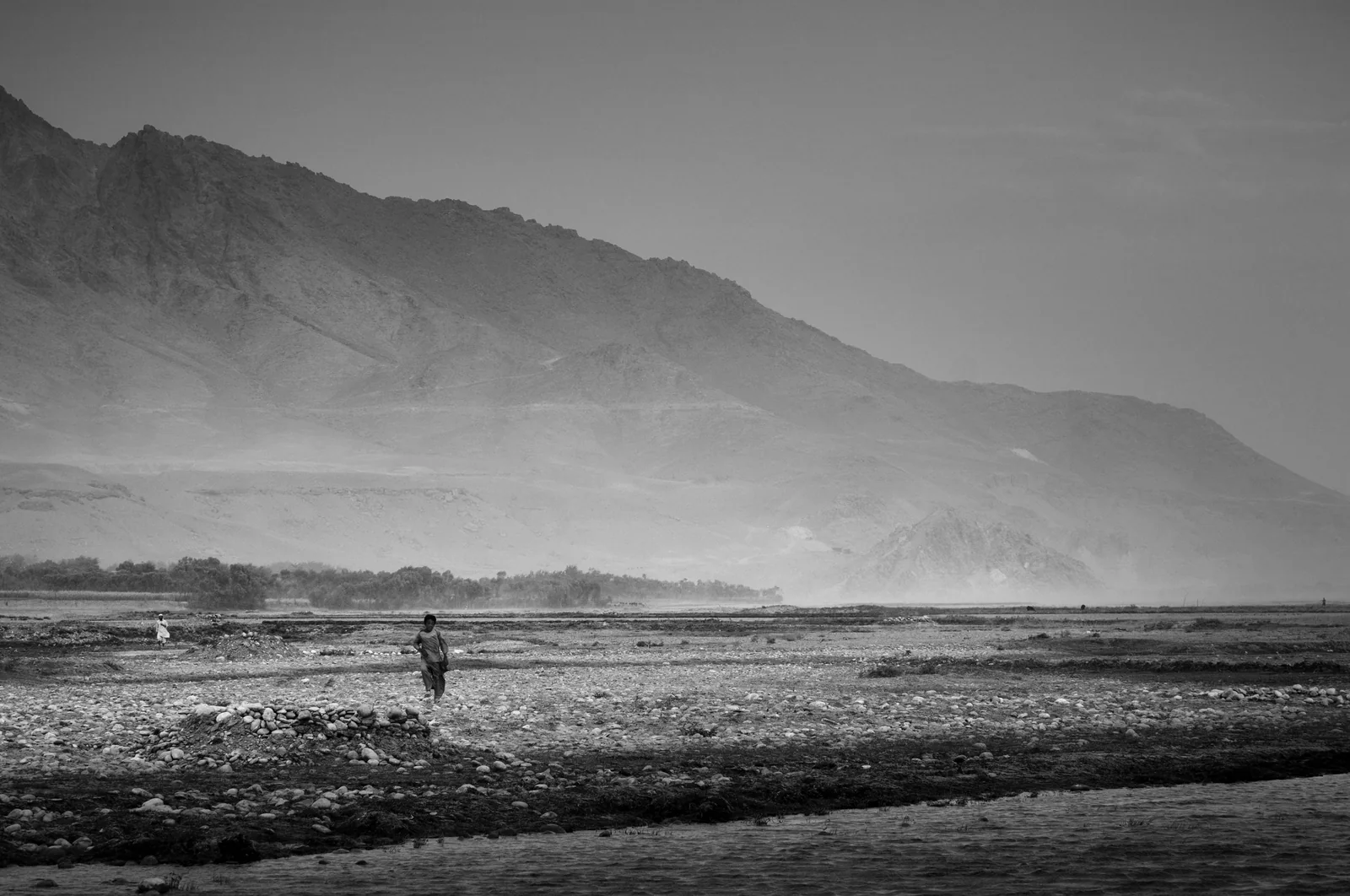
A black-and-white photograph of a river valley in Mahmood Raqi District, Kapisa Province, September 2008.
Photograph and sourceTop Things to Do in Kapisa
Consider a landscape-focused visit around Nijrab and Ghaus Dara, with the waterfall approach reviewed separately. Add a heritage interest such as the Sangi mosque where a visit is appropriate. Ask about a seasonal introduction to locally grown fruit, or explore Kapisa's archaeological background through the research on Kham Zargar. These are ideas to shape a programme, not fixed tour inclusions.
How to Reach Kapisa?
By Road
Mahmood Raqi is the provincial centre, and a documented road connects it with Nijrab to the east. Kapisa's districts require individual route planning: reaching the centre is different from reaching Ghaus Dara or a heritage site farther afield. Start by naming the intended locality, then ask Larmoond to review the approach, local transfers and current road information.
Plan Your Connections
Include your arrival point, onward destination and dates in your enquiry. Our team will review the connections for the complete journey.
Discuss your routeKapisa Tour Packages
A Private Journey Built Around You
Interested in Kapisa? Share the places you want to see, your travel dates and group size. We will review your request and discuss a suitable itinerary.
Submitting a journey request does not confirm availability or create a booking.
Plan a Private JourneyFrequently Asked Questions
Ghaus Dara waterfall, in Nijrab district, is identified in the province's tourism documentation. Include both the waterfall and district name in your enquiry so the team can review the specific approach and the type of visit you have in mind.
Historical references to Kapisa need to be read in their own geographical context. They should not automatically be mapped onto today's provincial boundary. For a modern itinerary, use the current district and site names rather than the ancient regional name alone.
Tagab pomegranates are documented as a notable local product. Ask about what is available during your visit and whether a market or producer introduction is appropriate. Fruit availability and access to a working orchard should be agreed locally.
Kohband's Abu Saeed Abul Khair shrine and historic towers in Alasay appear in official heritage discussions. They introduce other parts of the province, but should be assessed as separate proposed visits. Mention them early if they are important to your journey.
Kapisa Essential Information
Where to Stay in Kapisa?
Discuss accommodation after selecting the localities you want to visit. Ask whether the proposed programme calls for a local overnight stay or a return to your existing base. For any local property, request confirmation of room arrangements, bathroom facilities, heating or cooling and meals, with the exact location and transfers included in the plan.
A Few Tips Before Your Journey
At waterfalls and cultivated land, keep to agreed viewing areas and ask before entering private spaces. Religious places have their own users and caretakers; seek guidance before entering or taking photographs. Carry your waste out and make walking preferences clear before the route is selected.
Map of Kapisa
Sources and Further Reading
Sources and further reading
Content reviewed on 10 September 2026. These references document the province and its heritage; they do not confirm current access or tour availability.
Ministry of Information and Culture: Nijrab's natural and historic places and Ghaus Dara waterfall
https://www.moic.gov.af/en/node/11221
Ministry of Information and Culture: Kapisa heritage conservation discussion
https://www.moic.gov.af/index.php/en/node/6553
Haruko Tsuchiya, Sophia University: Study of Buddhist art from Gandhara to Kapisa at Kham Zargar (1984)
https://cir.nii.ac.jp/crid/2120307889887889024
Smithsonian National Museum of Asian Art: National Museum of Afghanistan oral history
https://mads.si.edu/mads/id/FS-FSA.A2024.03_NMAOH_2023.11.17_English
Travel planning sources
References reviewed on 10 September 2026. Historical reports describe places and routes; they do not establish current transport schedules or visitor access.
UN-Habitat: State of Afghan Cities (2015), provincial centres and geography
https://unhabitat.org/sites/default/files/download-manager-files/State%20of%20Afghan%20Cities%202015%20Volume_1.pdf
SIGAR: Mahmood Raqi-Nijrab road, provincial geography and elevation context (2009)
https://www.sigar.mil/Portals/147/Files/Reports/Audits-and-Inspections/Inspections/2009-10-02audit-09-02.pdf
Ministry of Information and Culture: Nijrab and Ghaus Dara waterfall
https://www.moic.gov.af/en/node/11221
Ministry of Information and Culture: Kapisa's documented heritage places
https://www.moic.gov.af/index.php/en/node/6553
Ministry of Agriculture: provincial products, including Tagab pomegranates
https://www.mail.gov.af/index.php/en/node/1862
Ministry of Agriculture: orchard crops in Kapisa
https://www.mail.gov.af/en/almost-200-acres-new-gardens-built-kapisa
Sophia University: Buddhist art in the Kapisa region at Kham Zargar (1984)
https://cir.nii.ac.jp/crid/2120307889887889024
Photo Credits
Sunlight through roadside trees in Farruhk Shah, Kapisa Province, August 2009.
Teddy Wade / Afghanistan Matters · 12 August 2009
Original photograph · CC BY 2.0
Resized and encoded as WebP.
A black-and-white photograph of a river valley in Mahmood Raqi District, Kapisa Province, September 2008.
Staff Sgt. Samuel Morse / U.S. Air Force · 16 September 2008
Original photograph · Public domain (U.S. Air Force)
Resized and encoded as WebP.