

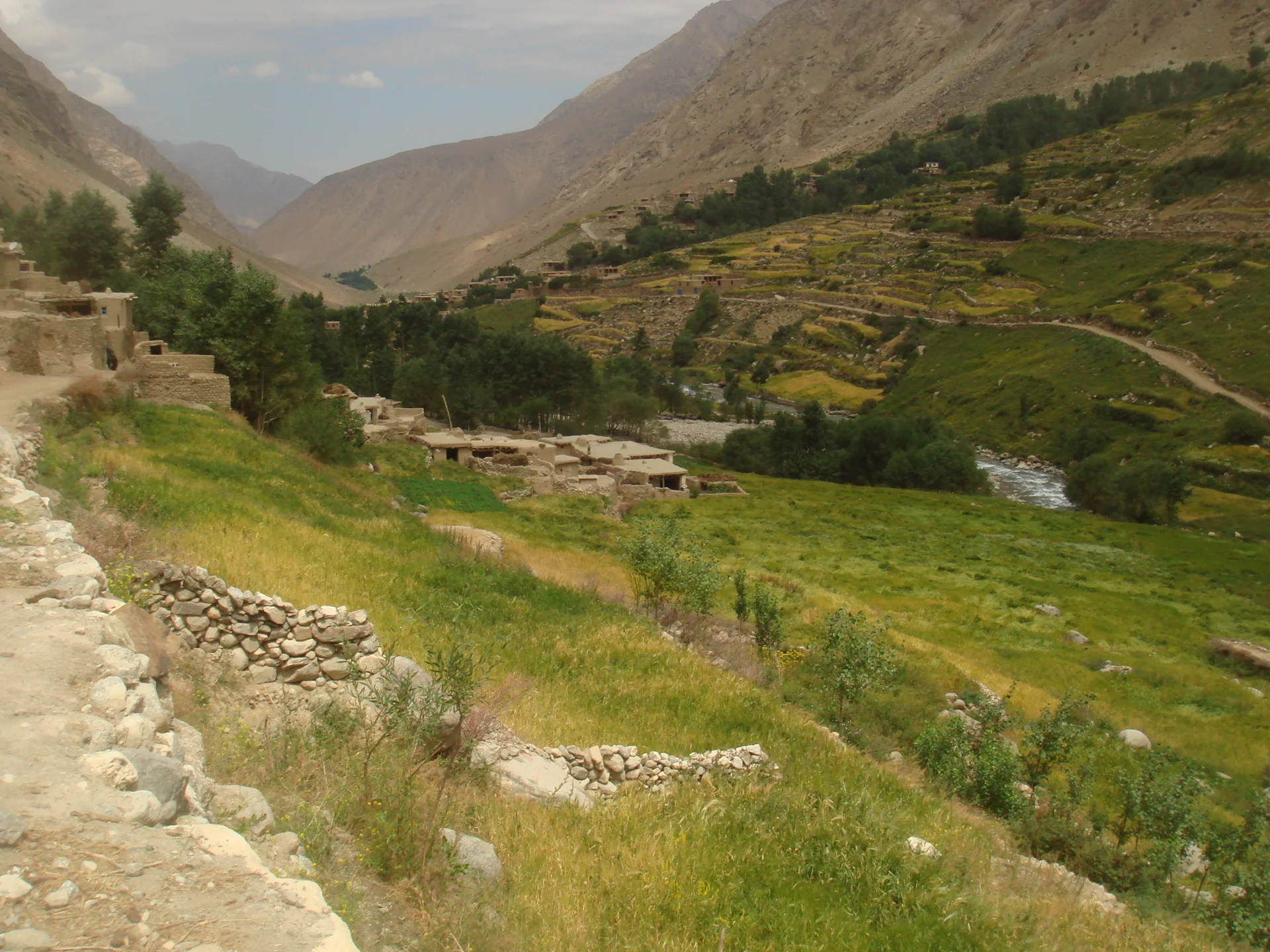
Deh Ta village and the Weghnan valley in Warsaj District, Takhar Province. Photo credits
About Takhar Tourism
Takhar's archaeological highlight is Ai Khanoum, the remains of a Greco-Bactrian city at the meeting of the Kokcha and Amu Darya rivers. Excavations revealed a theatre, religious buildings and written evidence of ancient city life. Discover the context behind these remains and share your particular interests when requesting a personal journey review.
Ai Khanoum places Takhar within the history of ancient Bactria and the connections between Greek settlers and the region. The site occupies a river confluence, and excavation identified the remains of an organised city. Its buildings and finds need to be understood through archaeological records, not imagined as an intact ancient settlement. Objects from Ai Khanoum have also appeared in exhibitions drawn from the National Museum of Afghanistan, offering a different view of the city's material culture. For an archaeology-focused journey, we suggest beginning with the evidence that interests you most: the city plan, inscriptions or excavated objects. Share those interests with Larmoond for review.
Ai Khanoum and its river setting
Ai Khanoum stands at the confluence of the Kokcha and Amu Darya. The archaeological account describes an upper city overlooking an area enclosed by the rivers and a substantial defensive wall. This relationship between the landform and the city is a useful way to begin understanding the site. Study its plan before considering individual monuments within the former settlement.
A city known through excavation
Excavations identified administrative buildings, religious structures and a theatre. These discoveries explain why Ai Khanoum matters to the study of Greek presence in Afghanistan. The place should be described as archaeological remains; historic plans and reconstruction drawings explain the past rather than show what stands intact today. That distinction helps set appropriate expectations for anyone interested in the former city.
Objects from the palace treasury
The National Gallery of Art's exhibition catalogue includes gold ingots, an inscribed amphora fragment and an ostracon from Ai Khanoum's palace treasury. These different materials offer a more detailed picture than a general label such as 'ancient city'. For visitors who enjoy material culture, we suggest asking how individual finds contribute to the interpretation of a building and the activities associated with it.
Art from a religious setting
The same catalogue records objects associated with the courtyard of a temple with niches, including a clay head and a bronze bowl handle. Their documented excavation contexts are part of their importance. They offer subjects for a discussion of artistic work and religious space without implying that the objects remain in the ruins. Collection records can be a valuable companion to learning about the destination.
Use reconstructions with care
The National Gallery of Art's 2008 Afghanistan exhibition included a digital reconstruction of Ai Khanoum alongside material from the National Museum of Afghanistan. A reconstruction can make a complex plan easier to understand, but it remains an interpretation. We suggest comparing such images with archaeological descriptions and clearly distinguishing illustrated ancient buildings from the remains that define the site today.
Make your Takhar enquiry specific
Tell Larmoond whether Ai Khanoum is the main reason for your interest in Takhar, and whether you prefer a general introduction or detailed archaeological context. Mention any walking or mobility requirements. The private-journey enquiry allows the proposed destination to be reviewed for your request. The eventual programme should identify the individual places and arrangements that have actually been agreed.
A Quick Information Guide to Takhar
| Provincial centre | Taloqan |
|---|---|
| Region | Northeastern Afghanistan |
| Known for | Ai Khanoum, the Kokcha-Amu Darya confluence and Farkhar |
| Journey focus | Archaeology, landscape and agricultural life |
Journey Ideas for Takhar
Start with the places and activities that interest you. Browse the destination below, then ask us to shape an individual itinerary around your priorities.
Explore journey optionsCulture, Traditions and Festivals
Takhar's history reaches beyond the archaeology of Ai Khanoum. Rice cultivation is a documented part of the province's agricultural life, while its tourism accounts identify places around Farkhar and Taloqan as well as ancient remains. A broader visit can connect the river landscape, cultivated land and contemporary provincial centre. Ask about local products and everyday life without assuming that one community represents the whole province.
Best Time to Visit Takhar
Spring
For a spring programme, review conditions for the specific archaeological and landscape stops. We recommend flexible outdoor plans, especially where the route extends beyond the provincial centre. Ask for current information rather than relying on pictures of greener conditions.
Summer
Plan a summer visit to Ai Khanoum with a comfortable pace for outdoor observation and breaks. If adding a valley destination, check its forecast separately. For agricultural interests, confirm which crops or products can be seen during the visit.
Autumn
An autumn enquiry can pair archaeological interests with local agricultural context. Ask what produce is available, agree any market visit beforehand, and leave sufficient daylight for the intended landscape stops and return journey.
Winter
Keep winter plans specific about the approach to Taloqan and any onward travel into other localities. Confirm the current route, practical outdoor programme and overnight arrangements before adding a distant site to an already busy journey.
Best Places to Visit in Takhar
Ai Khanoum and its river setting
Ai Khanoum stands at the confluence of the Kokcha and Amu Darya. The archaeological account describes an upper city overlooking an area enclosed by the rivers and a substantial defensive wall. This relationship between the …
Read moreA city known through excavation
Excavations identified administrative buildings, religious structures and a theatre. These discoveries explain why Ai Khanoum matters to the study of Greek presence in Afghanistan. The place should be described as archaeological remains; historic plans and …
Read moreObjects from the palace treasury
The National Gallery of Art's exhibition catalogue includes gold ingots, an inscribed amphora fragment and an ostracon from Ai Khanoum's palace treasury. These different materials offer a more detailed picture than a general label such …
Read moreTourist Attractions in Takhar
Photo Gallery
Deh Ta village and the Weghnan valley in Warsaj District, Takhar Province.
Photograph and source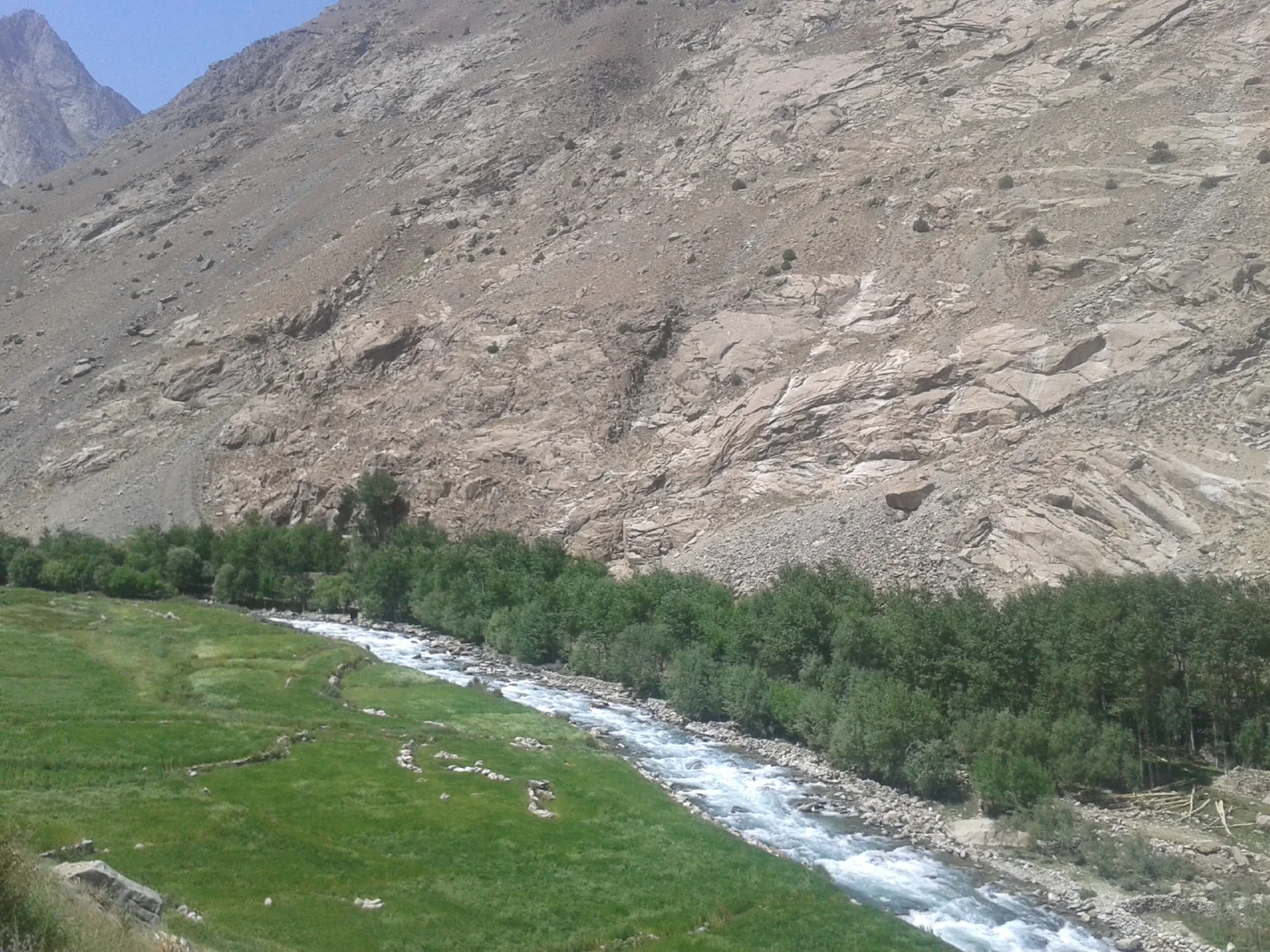
The Weghnan River near Aylaq-e Abanich in Warsaj District, Takhar Province, July 2014.
Photograph and sourceTop Things to Do in Takhar
Explore Ai Khanoum through its city plan and river setting, using archaeological records to explain what the surviving remains represent. For a broader landscape interest, discuss Farkhar as a separate addition. Around Taloqan, consider a locally agreed introduction to the town and produce markets. These themes can be combined only after the route and individual visits have been reviewed.
How to Reach Takhar?
By Road
Taloqan lies on the road connection between Kunduz and the route towards Kishem and Faizabad in Badakhshan. Ai Khanoum is a separate journey within Takhar, near the Kokcha-Amu Darya confluence; it is not a city-centre stop in Taloqan. Ask Larmoond to review the chosen approach and each local transfer, with current conditions considered before the programme is agreed.
Plan Your Connections
Include your arrival point, onward destination and dates in your enquiry. Our team will review the connections for the complete journey.
Discuss your routeTakhar Tour Packages
A Private Journey Built Around You
Interested in Takhar? Share the places you want to see, your travel dates and group size. We will review your request and discuss a suitable itinerary.
Submitting a journey request does not confirm availability or create a booking.
Plan a Private JourneyFrequently Asked Questions
No. It is an archaeological site associated with a Greco-Bactrian city. Excavations identified major buildings and objects, but a reconstruction shows an interpretation of the past. The destination should be understood through remains, plans and reliable archaeological explanation.
Taloqan is the provincial centre. Ai Khanoum is a separate archaeological locality near the meeting of the Kokcha and Amu Darya rivers. The two names should not be used interchangeably when arranging transport or deciding where to stay.
Farkhar's landscape and an introduction to Taloqan offer ways to broaden the province's story. Rice-growing culture and local produce are also useful themes. Ask for a focused programme rather than assuming these separate interests can all be included in one outing.
The Taloqan-Kishem-Faizabad road connection gives that idea a geographical basis. Whether it suits a particular journey depends on the chosen destinations, current route information and available time. Include your intended onward destination when requesting an itinerary review.
Takhar Essential Information
Where to Stay in Takhar?
Discuss Taloqan as a possible accommodation base in relation to the actual route, rather than assuming a property beside Ai Khanoum. Ask for the proposed property's name, room and bathroom arrangements, heating or cooling, electricity and meal details. Confirm whether your programme returns to that base or continues onward after the day's visits.
A Few Tips Before Your Journey
Bring a site plan if ancient urban history is a main interest: the remains can be difficult to interpret from appearance alone. Observe archaeological material in place and follow agreed paths. Ask before photographing people or cultivated land, and make your walking preferences part of the itinerary discussion.
Map of Takhar
Sources and Further Reading
Sources and further reading
Content reviewed on 10 September 2026. These references document the province and its heritage; they do not confirm current access or tour availability.
French Ministry of Culture and DAFA: Ai Khanoum
https://archeologie.culture.gouv.fr/fr/a-propos/ai-khanoum
National Gallery of Art: Afghanistan exhibition and Ai Khanoum
https://www.nga.gov/exhibitions/afghanistan
National Gallery of Art: Afghanistan exhibition object catalogue
https://www.nga.gov/content/dam/ngaweb/press/exh/2865/2865-list.pdf
Travel planning sources
References reviewed on 10 September 2026. Historical reports describe places and routes; they do not establish current transport schedules or visitor access.
UN-Habitat: State of Afghan Cities (2015), provincial centres and geography
https://unhabitat.org/sites/default/files/download-manager-files/State%20of%20Afghan%20Cities%202015%20Volume_1.pdf
World Bank: Emergency Transport Rehabilitation Project, Kunduz-Taloqan-Kishem-Faizabad road context
https://documents1.worldbank.org/curated/en/585431468195844409/pdf/ICR8900AF0P078101Official0Use0Only1.pdf
French Ministry of Culture and DAFA: Ai Khanoum
https://archeologie.culture.gouv.fr/fr/a-propos/ai-khanoum
Ministry of Information and Culture: Takhar's Farkhar, Taloqan and other destination context
https://moic.gov.af/index.php/en/director-information-and-culture-takhar-province-met-representatives-aga-khan-foundation
Ministry of Agriculture: rice cultivation in Takhar and Baghlan
https://www.mail.gov.af/index.php/en/rice-planting-and-yields-increased-15-1399-compared-1398
Photo Credits
Deh Ta village and the Weghnan valley in Warsaj District, Takhar Province.
Shahramnabizada · 6 February 2006 (date recorded by source)
Original photograph · CC BY-SA 4.0
Resized and encoded as WebP.
The Weghnan River near Aylaq-e Abanich in Warsaj District, Takhar Province, July 2014.
Shahramnabizada · 31 July 2014
Original photograph · CC BY-SA 4.0
Resized and encoded as WebP.