

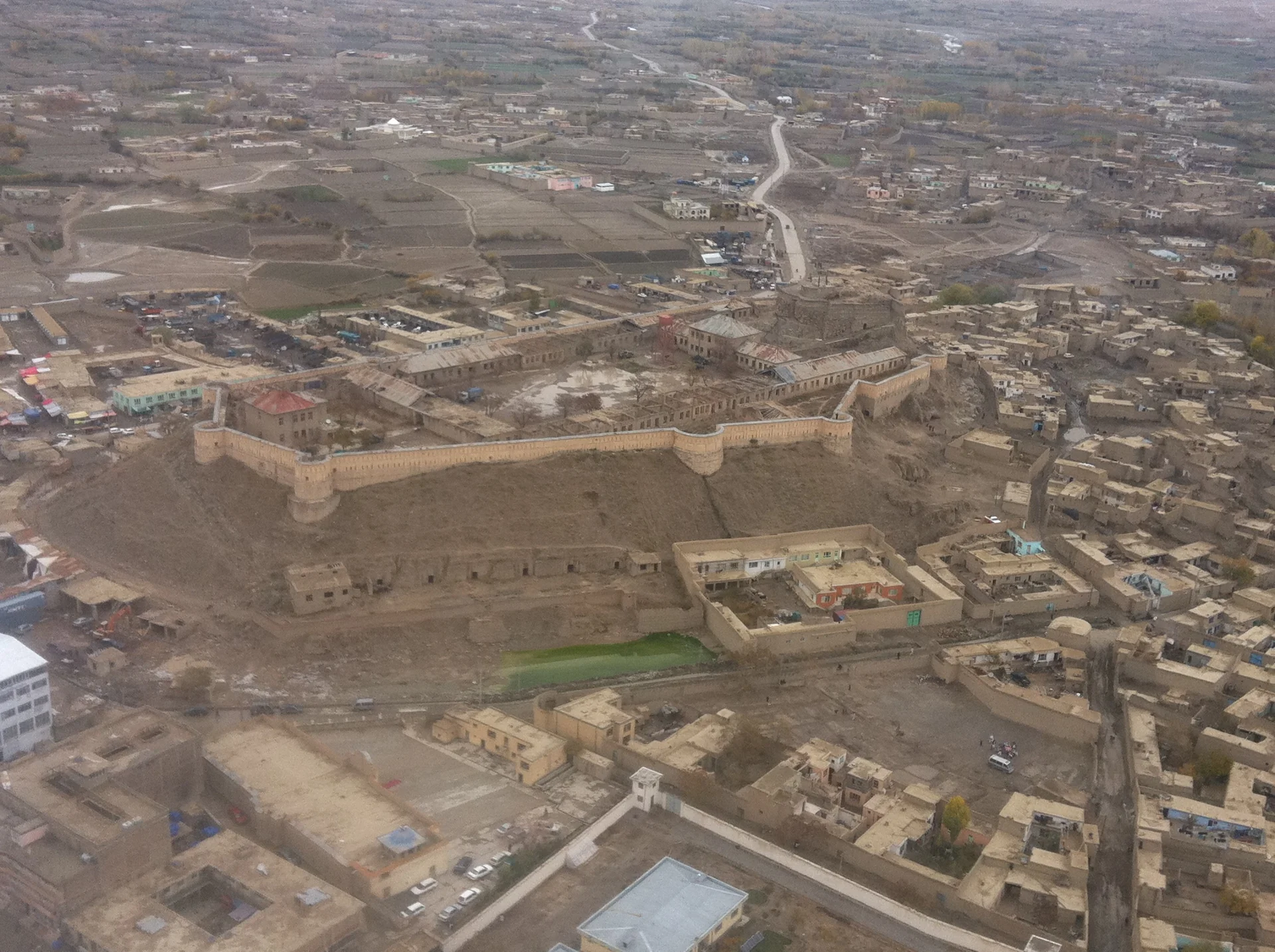
Aerial view of Ghazni citadel, photographed in November 2011. Photo credits
About Ghazni Tourism
Ghazni brings together historic minarets, the Bala Hissar and the tombs of Sultan Mahmud and Hakim Sanai. Its architectural and cultural heritage offers a focused introduction to the Ghaznavid period. Explore the background to these landmarks, then share your interests with Larmoond Travel and Tours for an individual journey review.
Ghazni rewards an interest in the details of historic places: the form of a tower, the memory attached to a tomb and the relationship between monuments and a city. The minarets and old-city remains connect the destination with the Ghaznavid era, while the documented heritage sites include the Bala Hissar and the tombs of Sultan Mahmud and Hakim Sanai. These make a useful starting point for a journey centred on architecture and cultural history. Use this guide to identify what you would like to explore, rather than treating every listed landmark as a confirmed stop. A proposed itinerary needs to be reviewed for your dates and interests.
The historic minarets
The towers associated with Masud III and Bahram Shah are distinguished by their star-shaped lower forms and ornamental brickwork. Their lost upper sections once gave them a different silhouette. Looking closely at the surviving geometry is a useful way to appreciate the design: the outline and surface decoration belong together. Historic drawings and photographs can help explain features that are no longer present.
Bala Hissar and the old city
Bala Hissar appears among Ghazni's documented historic landmarks. The minarets and parts of the old city have also been the subject of conservation reporting. We suggest considering these places together when you describe your interests: one monument alone cannot explain the whole city. Ask for a programme that allows context and observation, with the actual stops established during planning.
Sultan Mahmud and Hakim Sanai
The tombs of Sultan Mahmud and Hakim Sanai are both identified in the province's heritage records. They offer different starting points for exploring Ghazni's cultural memory. If either is important to your journey, mention it by name in your request. At any religious or commemorative place, allow room for its meaning to local people and ask before photographing people or entering a space.
A city with more than one historical layer
The heritage account of Ghazni includes archaeological work by the Italian mission and the fifteenth-century mausoleum of Sultan Abdul Razaq. This broader background is a reminder that Ghazni's story extends beyond a single dynasty. Historical publications and museum collections can enrich your understanding, but a past account of an exhibition or a building does not establish what is available to see during your journey.
Look closely at the craftsmanship
The unglazed decorative brickwork of the minarets belongs to a wider architectural tradition discussed in UNESCO's comparative documentation for Jam. For an architecture-focused journey, we suggest paying attention to changes in pattern, the junction between faces and the contrast between near and distant views. Photograph only from agreed positions and keep physical contact with historic surfaces to a minimum.
Shape your Ghazni request
Tell Larmoond whether your main interest is the minarets, the wider historic city or the sites connected with Ghazni's cultural figures. Mention how much detail you want from a visit and any walking or mobility needs. The private-journey enquiry is the place to request a review of these interests; the destination page itself does not reserve a tour or confirm individual site visits.
A Quick Information Guide to Ghazni
| Provincial centre | Ghazni |
|---|---|
| Region | South of Kabul, towards central Afghanistan's highlands |
| Known for | Ghaznavid minarets, Bala Hissar and historic tombs |
| Journey focus | Architecture, cultural history and city heritage |
Journey Ideas for Ghazni
Start with the places and activities that interest you. Browse the destination below, then ask us to shape an individual itinerary around your priorities.
Explore journey optionsCulture, Traditions and Festivals
Ghazni's cultural memory connects the tombs of Sultan Mahmud and Hakim Sanai with the city's historic buildings. A visit can explore the relationship between rulers, writers and places of remembrance, rather than concentrating only on monument photographs. We suggest allowing time for explanations of names and inscriptions, and approaching religious or commemorative places with respect for their local meaning.
Best Time to Visit Ghazni
Spring
For a spring journey, keep the order of outdoor visits flexible. Afghanistan's precipitation is concentrated in winter and early spring; confirm the local forecast and ground conditions before choosing extended walks around heritage sites.
Summer
We suggest placing detailed outdoor observation at the beginning or end of the day, with time for breaks between monuments. Check the actual forecast for Ghazni when choosing clothing and finalising the day's pace.
Autumn
An autumn programme can centre on architectural details and the city's cultural history. Choose a small number of priorities, allow enough daylight for photography, and review conditions before adding places outside the city.
Winter
For a winter request, start with a compact city programme and assess the approach journey separately. Confirm the forecast, road situation and room heating before agreeing to overnight arrangements or longer outdoor stops.
Best Places to Visit in Ghazni
The historic minarets
The towers associated with Masud III and Bahram Shah are distinguished by their star-shaped lower forms and ornamental brickwork. Their lost upper sections once gave them a different silhouette. Looking closely at the surviving geometry …
Read moreBala Hissar and the old city
Bala Hissar appears among Ghazni's documented historic landmarks. The minarets and parts of the old city have also been the subject of conservation reporting. We suggest considering these places together when you describe your interests: …
Read moreSultan Mahmud and Hakim Sanai
The tombs of Sultan Mahmud and Hakim Sanai are both identified in the province's heritage records. They offer different starting points for exploring Ghazni's cultural memory. If either is important to your journey, mention it …
Read moreTourist Attractions in Ghazni
Photo Gallery
Aerial view of Ghazni citadel, photographed in November 2011.
Photograph and source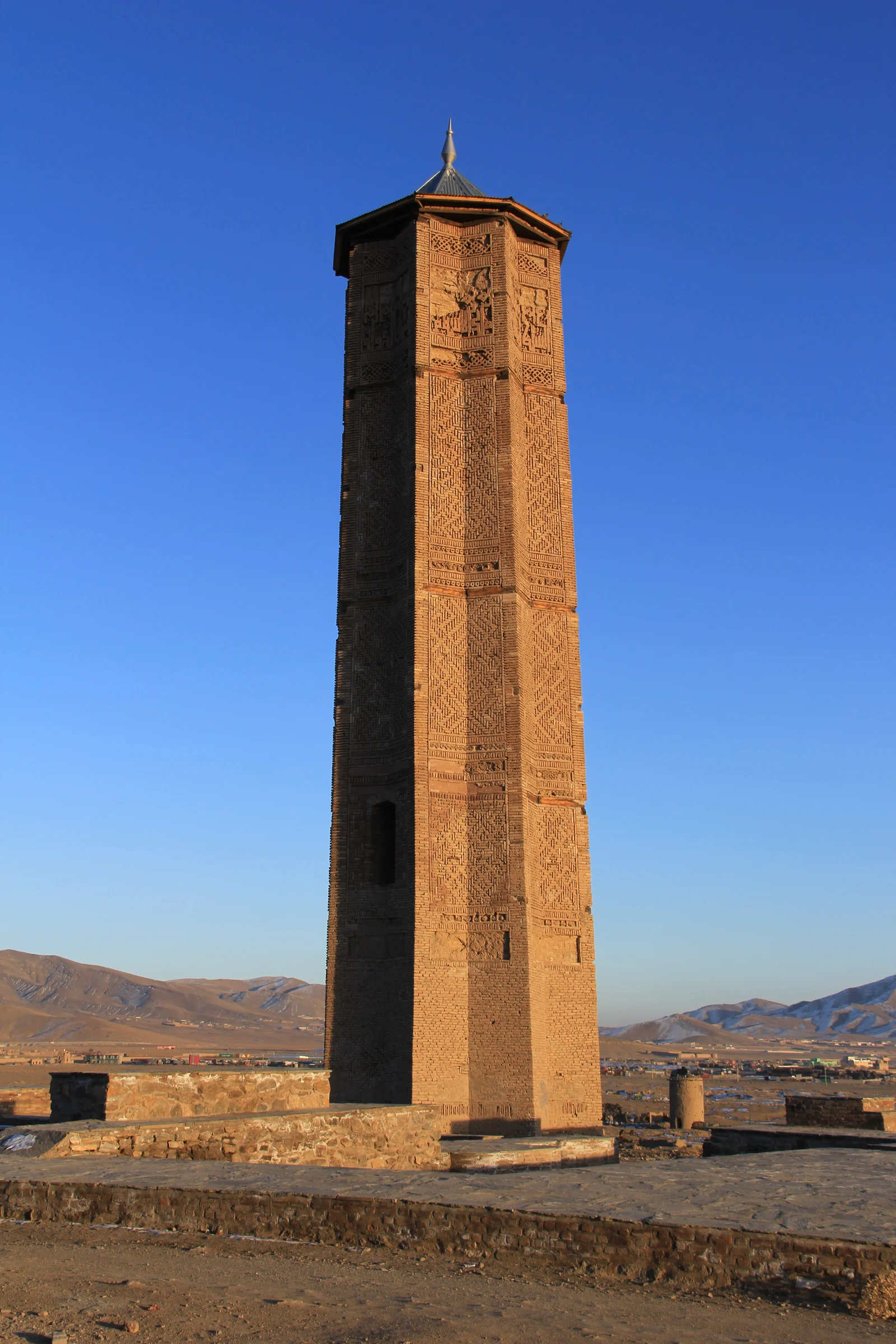
Historic brick minaret in Ghazni, photographed in January 2014.
Photograph and sourceTop Things to Do in Ghazni
Consider an architecture-focused visit to the minarets, comparing their star-shaped forms and decorative brickwork. Add the Bala Hissar and the sites associated with Sultan Mahmud and Hakim Sanai where a visit can be arranged. For a deeper introduction, use historic plans and photographs to discuss how Ghazni's buildings and cityscape have changed.
How to Reach Ghazni?
By Road
Ghazni lies on the Kabul-Kandahar road corridor: the approach from Kabul and the onward connection towards Kandahar are documented parts of the national road network. A journey should distinguish the intercity drive from transfers to individual monuments. Ask Larmoond to review the route, stopping points and current road conditions for your dates; no fixed driving time is assumed.
Plan Your Connections
Include your arrival point, onward destination and dates in your enquiry. Our team will review the connections for the complete journey.
Discuss your routeGhazni Tour Packages
A Private Journey Built Around You
Interested in Ghazni? Share the places you want to see, your travel dates and group size. We will review your request and discuss a suitable itinerary.
Submitting a journey request does not confirm availability or create a booking.
Plan a Private JourneyFrequently Asked Questions
Both. Ghazni city is the provincial centre, while the province covers a wider area. A city heritage visit and a journey into other districts need different programmes. Name the places you want to include so that the scope is clear.
The Bala Hissar and the tombs of Sultan Mahmud and Hakim Sanai provide other starting points. They introduce different aspects of Ghazni's cultural history. Individual visits should be checked during planning rather than assumed from their appearance in a guide.
The surviving towers have lost their former upper sections. Drawings and older photographs can explain their earlier appearance, while a visit focuses on the remaining form and decoration. A historical reconstruction is different from the monument's present condition.
Decide first whether you want an introduction to selected monuments or a fuller city programme with detailed interpretation. The time needed also depends on your starting point and onward journey. Share those details so the itinerary can be paced realistically.
Ghazni Essential Information
Where to Stay in Ghazni?
Begin an accommodation enquiry with Ghazni city and the locations of your proposed visits. Share your room arrangement, bathroom preferences and any needs concerning heating, electricity or quiet. Ask Larmoond to confirm a named property's current facilities, availability and inclusion in your quotation before relying on an overnight plan.
A Few Tips Before Your Journey
Bring your main historical interests into the planning conversation: architecture, literature and religious heritage lead to different visits. Ask before photographing people or entering a religious space. Follow the agreed paths around monuments and leave carved, inscribed or loose material in place.
Map of Ghazni
Sources and Further Reading
Sources and further reading
Content reviewed on 10 September 2026. These references document the province and its heritage; they do not confirm current access or tour availability.
Ministry of Information and Culture: historic sites in Ghazni
https://moic.gov.af/index.php/dr/node/3232
Ministry of Information and Culture: conservation of Ghazni's minarets and old city
https://www.moic.gov.af/en/node/4564
UNESCO World Heritage Centre: Jam nomination, comparative discussion of Ghazni's towers
https://whc.unesco.org/uploads/nominations/211rev.pdf
The Silk Road: Museums in Afghanistan, Alessandro Califano (2011)
https://edspace.american.edu/silkroadjournal/wp-content/uploads/sites/984/2017/09/Museums-in-Afghanistan.pdf
Travel planning sources
References reviewed on 10 September 2026. Historical reports describe places and routes; they do not establish current transport schedules or visitor access.
UN-Habitat: State of Afghan Cities (2015), provincial centres and geography
https://unhabitat.org/sites/default/files/download-manager-files/State%20of%20Afghan%20Cities%202015%20Volume_1.pdf
FAO: Afghanistan Agro-Ecological Zoning Atlas, Part 1, seasonal climate context
https://openknowledge.fao.org/3/ca6889en/ca6889en.pdf
ADB: Road asset management and the Kabul-Ghazni-Kandahar highway corridor
https://www.adb.org/subjects/roads-and-highways?page=333
Ministry of Information and Culture: historic sites in Ghazni
https://moic.gov.af/index.php/dr/node/3232
UNESCO: Jam nomination, comparative description of Ghazni's historic minarets
https://whc.unesco.org/uploads/nominations/211rev.pdf
Photo Credits
Aerial view of Ghazni citadel, photographed in November 2011.
Ahodges7 · 9 November 2011
Original photograph · CC BY-SA 4.0
Resized and encoded as WebP.
Historic brick minaret in Ghazni, photographed in January 2014.
AhmadElhan · 6 January 2014
Original photograph · CC BY-SA 4.0
Resized and encoded as WebP.