

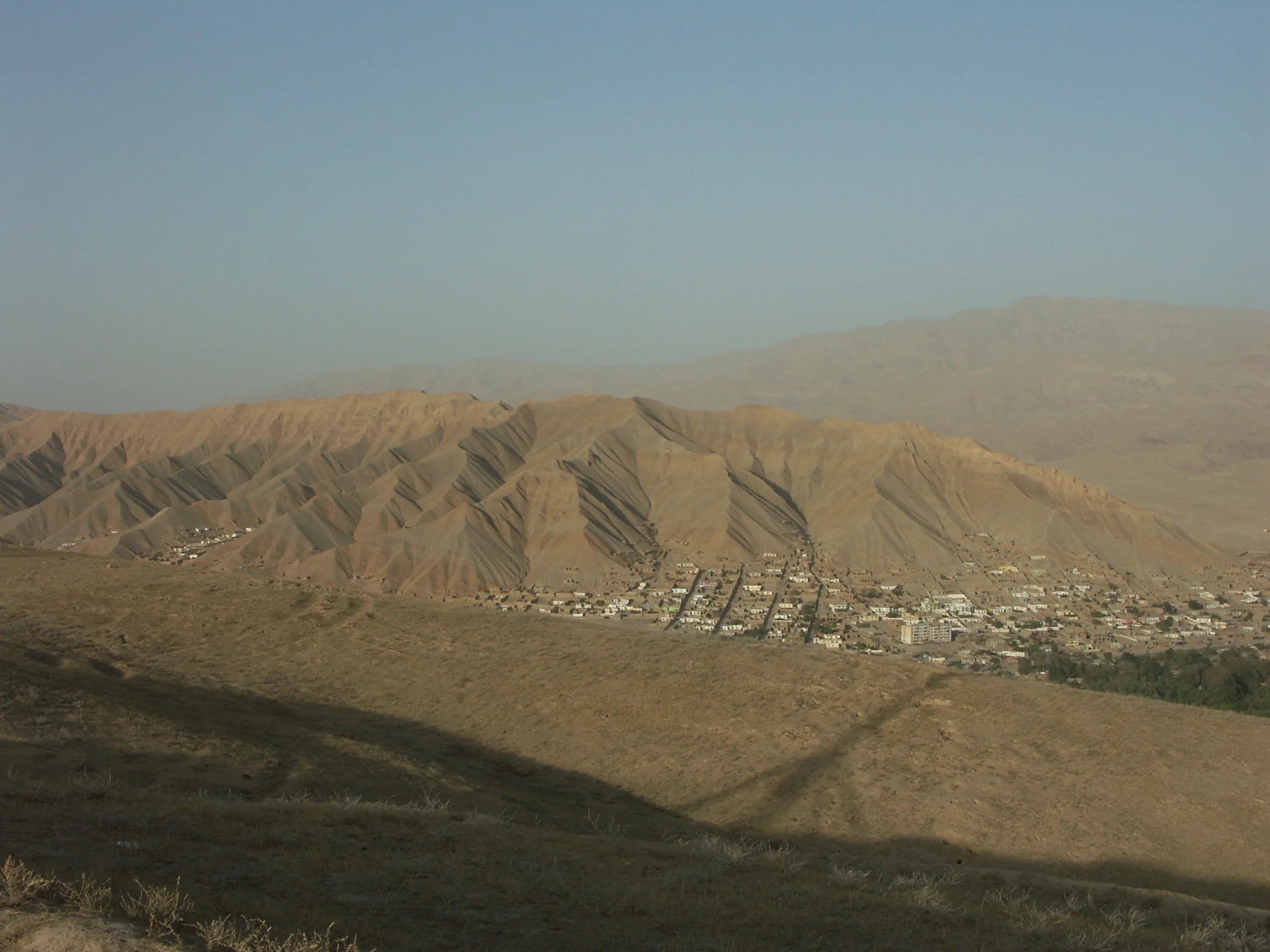
View towards Pul-e Khumri, Baghlan Province, September 2006. Photo credits
About Baghlan Tourism
Baghlan offers an introduction to Kushan archaeology through Surkh Kotal, a sanctuary site with terraces, a monumental stairway and important inscriptions. Its significance comes from the evidence uncovered there, rather than a surviving complete temple. Explore the story of the site and discuss an archaeology-focused journey request with Larmoond Travel and Tours.
Surkh Kotal gives Baghlan a distinctive place in Afghanistan's archaeological story. Excavation revealed a Kushan sanctuary arranged across a hillside, with a monumental stairway and inscriptions that helped researchers interpret its history. A sculpture from the site, discussed by the British Museum, provides another way to understand this heritage through the objects it produced. The destination is best approached as an archaeological landscape: the former buildings are understood through excavation records, surviving remains and careful interpretation. If your interest lies in the Kushan period, architectural plans or the relationship between objects and their original setting, explain that in your enquiry so a relevant programme can be reviewed.
Surkh Kotal's terraced sanctuary
DAFA's excavation account describes a sanctuary spread across terraces and approached by a monumental stairway. The arrangement is a useful starting point for understanding how the builders shaped the hill. Rather than expecting a complete standing temple, consider the plan and the relationship between levels. An archaeological drawing can help translate the remains into a clearer idea of the former complex.
What the inscriptions reveal
Inscriptions and coins were important to interpreting Surkh Kotal. DAFA's account connects the sanctuary's activity with Kushan rulers and records several significant inscriptions from the excavations. These finds make the site more than a study of building form: they also provide evidence for its history. A good introduction should explain what the evidence supports and distinguish it from details that remain uncertain.
A sculpture and its original setting
The British Museum describes a bull sculpture excavated at Surkh Kotal and dates it to the second century CE. Its curator identifies an inner sanctuary as the probable original setting. The word 'probable' matters: archaeology involves interpretation as well as discovery. Considering an object alongside the site's plan helps connect artistic work with the building in which it may have belonged.
The story of a recovered object
The same sculpture was stolen from the National Museum of Afghanistan in the 1990s and later identified in Britain. The museum's account records cooperation to establish its provenance and prepare for its return. This history is a reminder that Baghlan's heritage is represented both in the landscape and in documented collections. A museum object should not be assumed to remain at its excavation site.
How to approach an archaeological landscape
We suggest preparing a few focused questions before an archaeology-centred visit: how was the hill organised, which parts of the plan are visible, and what comes from the written record? Give equal attention to the setting and the explanation. Leave stones and fragments where they are, and use the paths and observation points agreed during an arranged visit so that interest in the site supports its care.
Discuss a Baghlan programme
Tell Larmoond that Surkh Kotal is a priority if you want it considered in your journey. Explain whether your interest is a general introduction or a closer discussion of Kushan archaeology, and include walking or mobility needs. The private-journey enquiry provides a way to request that review. A description of the province does not itself establish the practical scope of an individual visit.
A Quick Information Guide to Baghlan
| Provincial centre | Pul-e Khumri |
|---|---|
| Region | Northern Afghanistan |
| Known for | Surkh Kotal, Kushan heritage and agricultural landscapes |
| Journey focus | Archaeology, local food production and wider northern routes |
Journey Ideas for Baghlan
Start with the places and activities that interest you. Browse the destination below, then ask us to shape an individual itinerary around your priorities.
Explore journey optionsCulture, Traditions and Festivals
Baghlan's cultural life includes poetry gatherings and an agricultural landscape shaped by rice, melons and other crops. A documented Salang Zamzame gathering brought together poets and teachers working in different languages. These strands give a visit contemporary context alongside Kushan archaeology: ask about the province's literature, cultivated land and local produce rather than treating its story as entirely ancient.
Best Time to Visit Baghlan
Spring
Spring planning should consider both the archaeological stop and the approach journey. Much of Afghanistan's precipitation falls in winter and early spring, so review current ground and road conditions before deciding how much outdoor exploration to include.
Summer
We suggest giving an exposed archaeological visit a manageable pace, with breaks and time for explanation. For a produce-focused interest, ask what is actually available locally. Use the forecast for each stop rather than one assumption for the entire province.
Autumn
An autumn journey can combine archaeological interpretation with a discussion of agriculture and local products. Confirm any producer or market visit in advance, and leave enough time for both the site and the wider provincial context.
Winter
If arriving via Salang, treat that mountain approach as a separate part of winter planning. Confirm current route information and the practical scope of the proposed visit, including outdoor stops, onward travel and any room heating requirements.
Best Places to Visit in Baghlan
Surkh Kotal's terraced sanctuary
DAFA's excavation account describes a sanctuary spread across terraces and approached by a monumental stairway. The arrangement is a useful starting point for understanding how the builders shaped the hill. Rather than expecting a complete …
Read moreWhat the inscriptions reveal
Inscriptions and coins were important to interpreting Surkh Kotal. DAFA's account connects the sanctuary's activity with Kushan rulers and records several significant inscriptions from the excavations. These finds make the site more than a study …
Read moreA sculpture and its original setting
The British Museum describes a bull sculpture excavated at Surkh Kotal and dates it to the second century CE. Its curator identifies an inner sanctuary as the probable original setting. The word 'probable' matters: archaeology …
Read moreTourist Attractions in Baghlan
Photo Gallery
View towards Pul-e Khumri, Baghlan Province, September 2006.
Photograph and source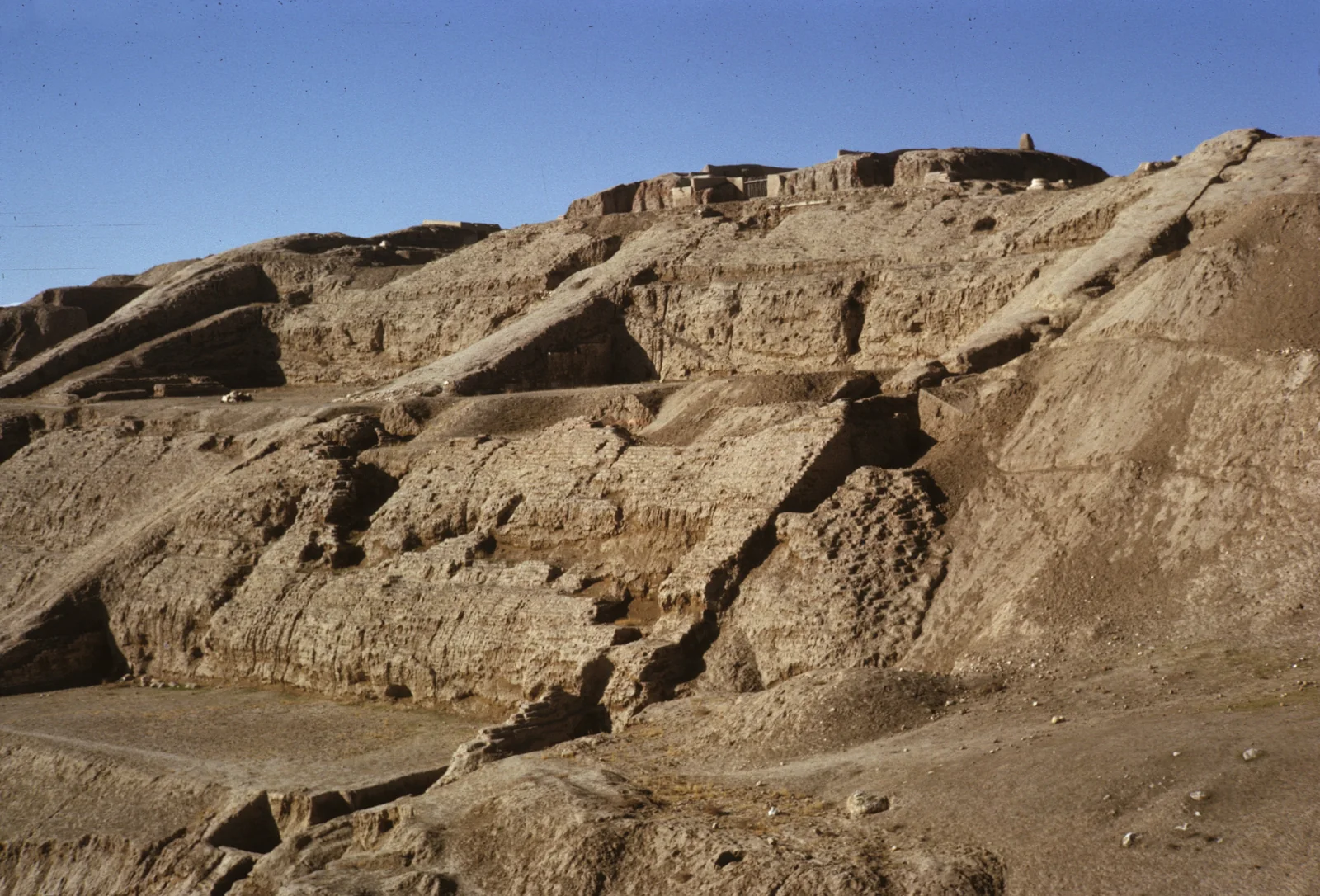
The monumental staircase at Surkh Kotal, Baghlan Province, in a historical photograph from 1963.
Photograph and sourceTop Things to Do in Baghlan
Use a visit to Surkh Kotal to study the relationship between the hillside, terraces and former sanctuary. A plan or archaeological drawing helps explain the remains. For a broader Baghlan programme, consider an introduction to Pul-e Khumri and locally grown produce where arrangements allow, or ask how the surrounding agricultural landscape fits into the journey.
How to Reach Baghlan?
By Road
Pul-e Khumri lies on the northern road network, connected with Kabul by the Salang corridor. Other northern routes extend towards Samangan and Kunduz. Surkh Kotal requires its own local approach within Baghlan. Review the complete sequence of intercity travel and local stops; the route's geographical existence does not provide a current driving time or road-condition guarantee.
Plan Your Connections
Include your arrival point, onward destination and dates in your enquiry. Our team will review the connections for the complete journey.
Discuss your routeBaghlan Tour Packages
A Private Journey Built Around You
Interested in Baghlan? Share the places you want to see, your travel dates and group size. We will review your request and discuss a suitable itinerary.
Submitting a journey request does not confirm availability or create a booking.
Plan a Private JourneyFrequently Asked Questions
The provincial centre is Pul-e Khumri. Baghlan is also the name of another town as well as the province, so accommodation and transfer requests should identify the intended place clearly. Using only the province name can leave the location ambiguous.
It is an archaeological sanctuary site understood through surviving remains, excavation plans, inscriptions and finds. A visit should focus on that evidence. Images reconstructing the former buildings should not be taken as a picture of an intact temple today.
Rice and melon cultivation, the landscape around settlements and the province's literary activity provide other themes. These can enrich a proposed journey, with specific local encounters or produce visits considered according to your interests and suitable arrangements.
Do not assume so. Objects from the site have entered museum collections; the British Museum has documented the history of a recovered Surkh Kotal sculpture. Ask separately about any collection visit, and approach the site itself as an archaeological landscape.
Baghlan Essential Information
Where to Stay in Baghlan?
Pul-e Khumri is a starting point for discussing an overnight base, depending on the agreed route. Ask for a named property's current availability and clear details about rooms, bathrooms, heating or cooling, electricity and meal arrangements. Confirm how the accommodation relates to Surkh Kotal and any onward travel before accepting the programme.
A Few Tips Before Your Journey
At Surkh Kotal, avoid moving stone or collecting fragments: their position is part of the archaeological record. For visits involving agriculture, obtain agreement before entering fields or photographing workers. Share whether your interest is general sightseeing or detailed archaeology so explanations and walking can be paced accordingly.
Map of Baghlan
Sources and Further Reading
Sources and further reading
Content reviewed on 10 September 2026. These references document the province and its heritage; they do not confirm current access or tour availability.
Délégation Archéologique Française en Afghanistan: Surkh Kotal excavations
https://www.dafa-afgh.org/recherche/les-operations-de-terrain-entre-1922-et-1982/surkh-kotal/
British Museum Magazine, Spring/Summer 2020: recovered Surkh Kotal sculpture
https://www.britishmuseum.org/sites/default/files/2020-04/BMMag96-04-FINAL.pdf
Travel planning sources
References reviewed on 10 September 2026. Historical reports describe places and routes; they do not establish current transport schedules or visitor access.
UN-Habitat: State of Afghan Cities (2015), provincial centres and geography
https://unhabitat.org/sites/default/files/download-manager-files/State%20of%20Afghan%20Cities%202015%20Volume_1.pdf
World Food Programme: Afghanistan General Logistics Planning Map (2021)
https://logcluster.org/sites/default/files/public/2021-10/afgglpma3l_20211013.pdf
World Bank: Emergency Transport Rehabilitation Project, Kabul-Salang-Pul-e Khumri corridor
https://documents1.worldbank.org/curated/en/555341468767717186/pdf/multi0page.pdf
FAO: Afghanistan Agro-Ecological Zoning Atlas, Part 1, seasonal climate context
https://openknowledge.fao.org/3/ca6889en/ca6889en.pdf
DAFA: Surkh Kotal excavations and archaeological evidence
https://www.dafa-afgh.org/recherche/les-operations-de-terrain-entre-1922-et-1982/surkh-kotal/
British Museum Magazine: recovered Surkh Kotal sculpture (2020)
https://www.britishmuseum.org/sites/default/files/2020-04/BMMag96-04-FINAL.pdf
Ministry of Information and Culture: Salang Zamzame poetry gathering in Baghlan (2023)
https://moic.gov.af/en/node/3346
Ministry of Agriculture: rice cultivation in Baghlan and Takhar
https://www.mail.gov.af/index.php/en/rice-planting-and-yields-increased-15-1399-compared-1398
Ministry of Agriculture: melon cultivation in Baghlan
https://mail.gov.af/en/node/18336
Photo Credits
View towards Pul-e Khumri, Baghlan Province, September 2006.
E. Heidtmann · 13 September 2006
Original photograph · CC BY-SA 3.0
Resized and encoded as WebP.
The monumental staircase at Surkh Kotal, Baghlan Province, in a historical photograph from 1963.
Afghanistan in the Early 1960s · 1963 (historical photograph)
Original photograph · CC BY-SA 2.0
Resized and encoded as WebP.